Why new AI video models feel worse? (An Article from the future)
Why better models can still over-process a shot, and why the right model depends on what you are making.
Research · Essay · May 11, 2026 · By Mehul Agarwal · 3 min read

This thumbnail won't be absurd in 12-18 months. I'd actually bet on it.
@MKBHD just shot the same photo on every iPhone from 1 to 17. The wild part? The iPhone 11 often looks more natural than the 17. Galaxy S23 beats the S26 on regular daylight shots.
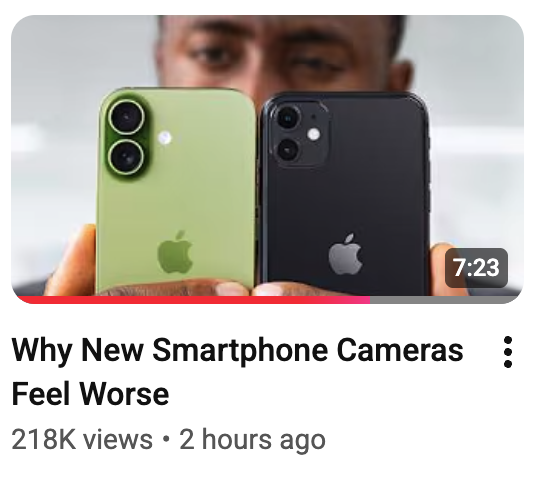
The newer phones aren't worse. Phones got so good at rescuing impossible shots (backlit, low light, fast motion) that they now over-cook the easy ones. Every trick (HDR, tone mapping, face detection) firing on a photo that didn't need saving. Hello, halos and that weird plastic glow.
I'm going to argue: AI image and video models are nothing but modern cameras. A prompt is a viewfinder. A generation is a shutter press. The model decides exposure, color, composition, motion: everything a camera pipeline decides, just from text instead of light.
So it would be strange if they didn't follow the same arc smartphone cameras just lived through. First they're bad. Then they get good in ideal conditions (we're here).
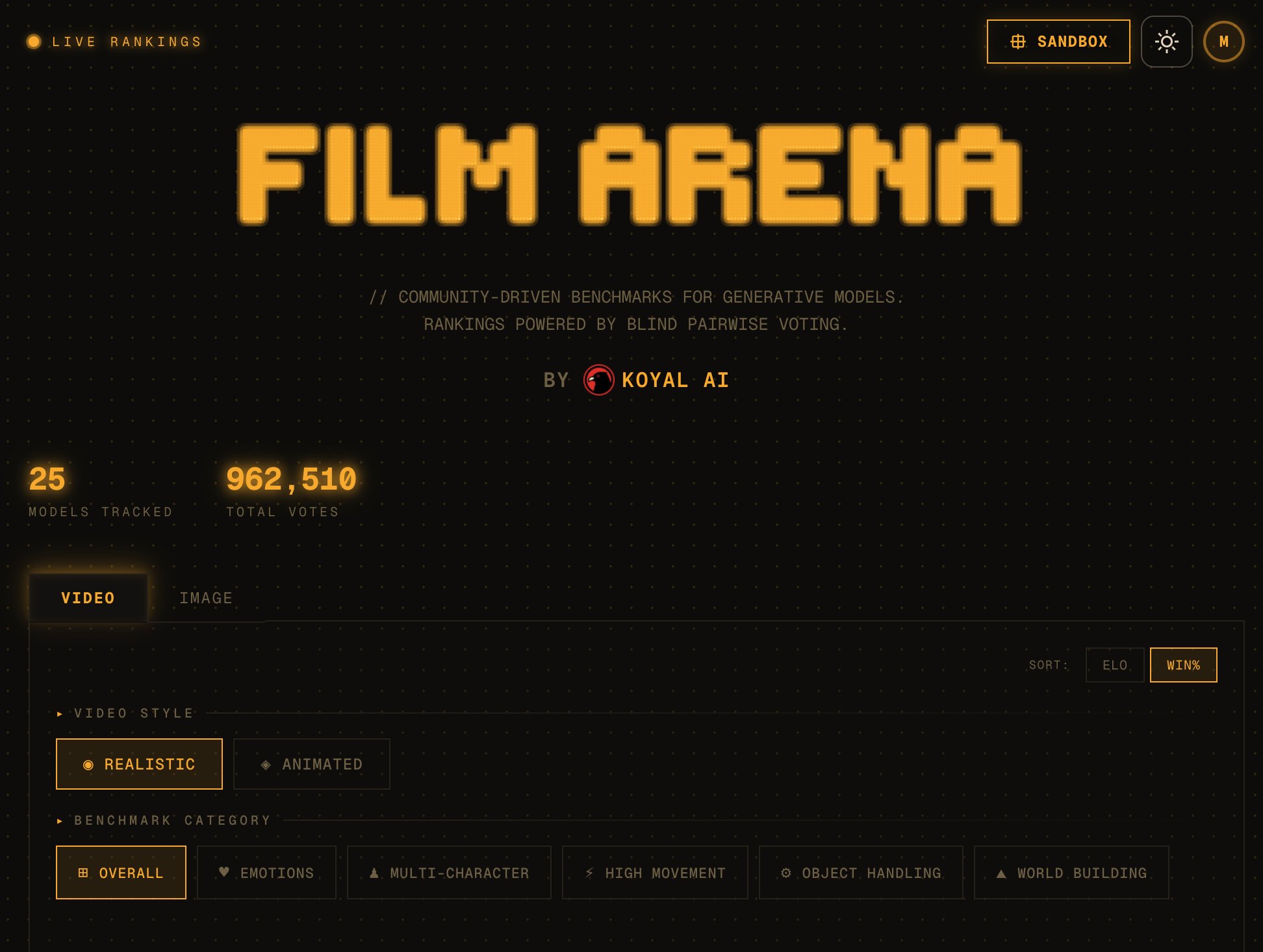
Then they fight over edge cases: long shots, fast motion, character consistency. And then, inevitably, the tricks that saved the hard shots start over-processing the easy ones. That slight uncanny gloss on AI video, the too-smooth skin, the too-clean lighting? Same failure mode as smartphone over-HDR. Tricks meant for hard shots, applied to every shot. And this is the exact reason we built Film Arena (filmarena.ai).
There's also a deeper truth underneath all of this that the smartphone era already proved: no single model is going to be good at everything. Just like no single camera is. A DP doesn't shoot a dialogue close-up and a wide chase scene with the same lens, and a phone that nails portraits will still get smoked by a dedicated sports camera on fast motion.
AI is converging on the same reality. A model that's incredible at realistic human faces will over-process a stylized landscape. A model great at fluid motion will produce uncanny static portraits. The dream of "one model to rule them all" is the same dream the smartphone industry sold for a decade before quietly admitting it was never true.
The smartphone industry only figured out over-processing was happening because people put the photos side by side. AI video needs the same, and right now there's no agreed-upon way to measure which model is actually better for which kind of shot.
Film Arena fixes that: blind, community-driven comparisons across every major image and video model. You can't tune what you can't measure, and you definitely can't pick the right tool without seeing them next to each other.
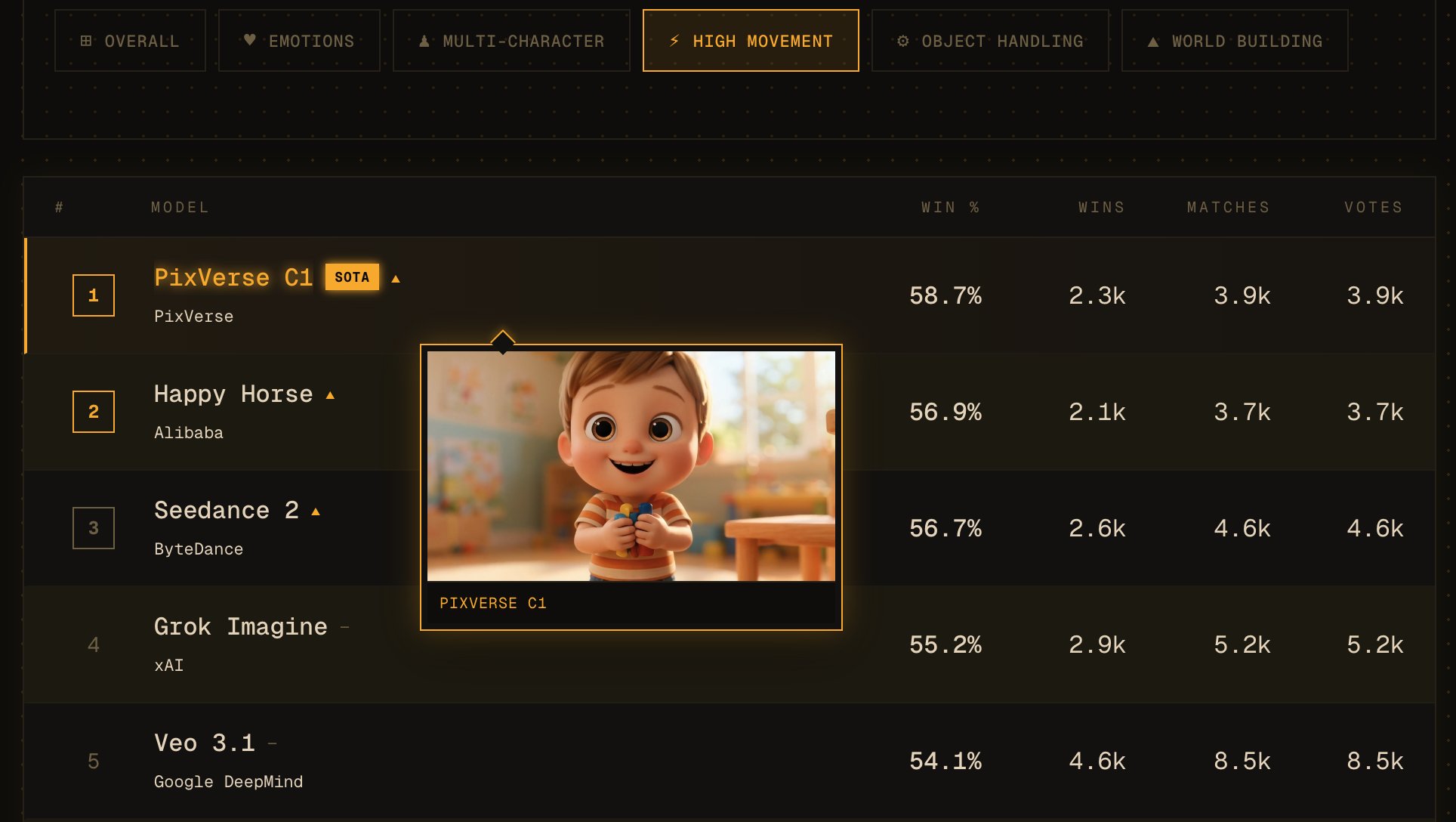
This also feeds directly into how @KoyalAI works. We benchmark 40+ models continuously and pick the right one for each scene at runtime. The answer to "which AI model is best?" is the same as "which camera is best?": depends entirely on what you're shooting. A dialogue close-up and a wide action shot want different tools. Locking creators to one model is like telling a DP they only get one lens for the whole film.
MKBHD's real point was that the separation between cameras is no longer raw quality. It's taste in when to stop processing. Same will be true for AI models within two years. The winners won't be whoever has the biggest model. They'll be whoever knows when to turn the tricks off, and which model to reach for in the first place.
Which is why I don't think that thumbnail is a joke. It's just early.
Sources
- Why new AI video models feel worse? (An Article from the future) — Mehul Agarwal on X. Originally published on X.
Published in Koyal News. Canonical page: https://koyal.ai/news/why-new-ai-video-models-feel-worse