Pure Text-to-Image Models Are Bullshit
Why production workflows need image inputs, editability and models that can be tuned.
Research · Essay · June 4, 2026 · By Mehul Agarwal · 3 min read
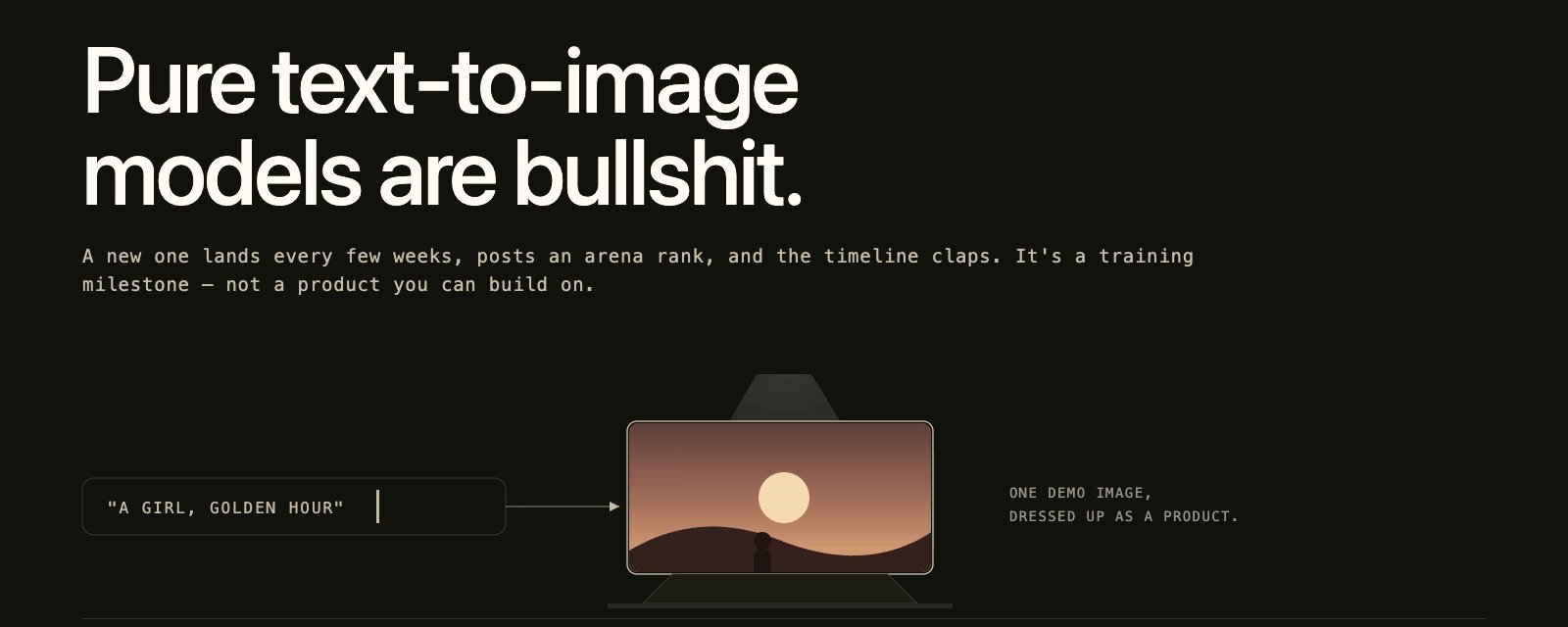
Every few days, another text-to-image model lands. Ideogram V4, Krea 2, Recraft V4, each one drops, posts its arena rank, and the timeline claps. As a researcher, I'm tired of seeing them. As a creative, I'm definitely way over my head. Which model is the best? Which one should I use?
But here's my unpopular take: a pure text-to-image model has no real use today. Turning words into one image, with nothing going in but text, is nothing but a training milestone dressed up as a product.
It Is Extremely Tough to Out-Data the Top Labs
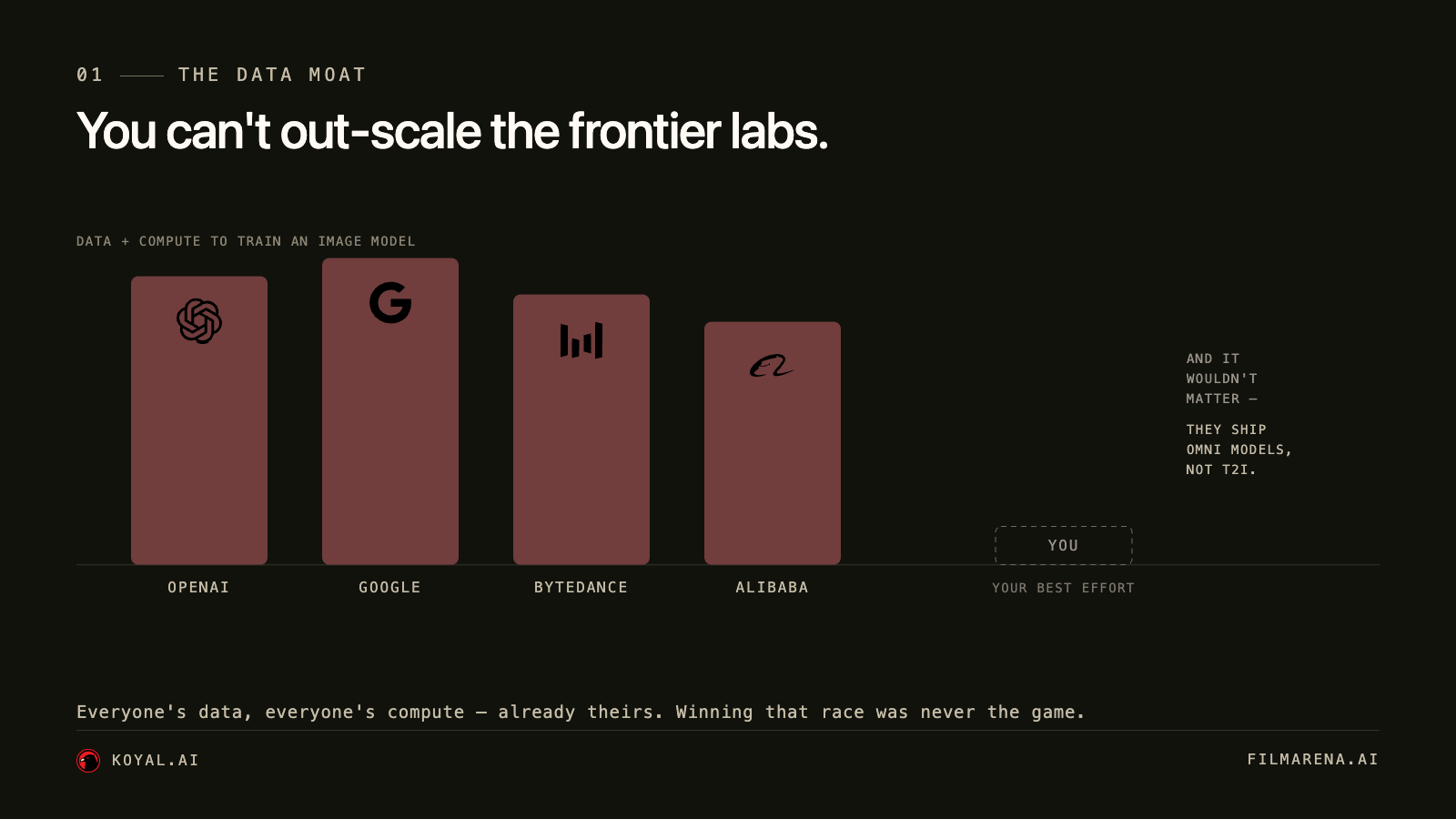
OpenAI, Google, ByteDance, and Alibaba already have everyone's data and the compute to match. Out-dataing them on raw text-to-image is extremely tough. Not impossible, AI image is still young and a DeepSeek-style moment could shake it up, but hard. And the kicker: even if you won, it would barely matter, because the top labs do not ship pure text-to-image anyway. GPT Image, Nano Banana, Seedream, Qwen are all omni, image-edit-friendly from the get-go. So a prompt-only model is the one thing a smaller lab should not chase. You fight uphill on quality and ship something with no real use.
Nobody Lives in One Model
Real pipelines are multi-model. You bounce between three or four tools in a single project, generate here, edit there, upscale somewhere else, all wired together through APIs. A closed model that does not slot cleanly into that flow gets skipped, however good it looks. Midjourney is the cautionary tale: stunning output, but a walled garden that stayed Discord-first and came late to a real API, and now it is no longer SOTA. Beauty did not save it. Composability is survival, and a closed prompt-only model offers neither the openness to tune nor the edit hooks a pipeline needs.
Open and Fine-Tunable Is the Real Value
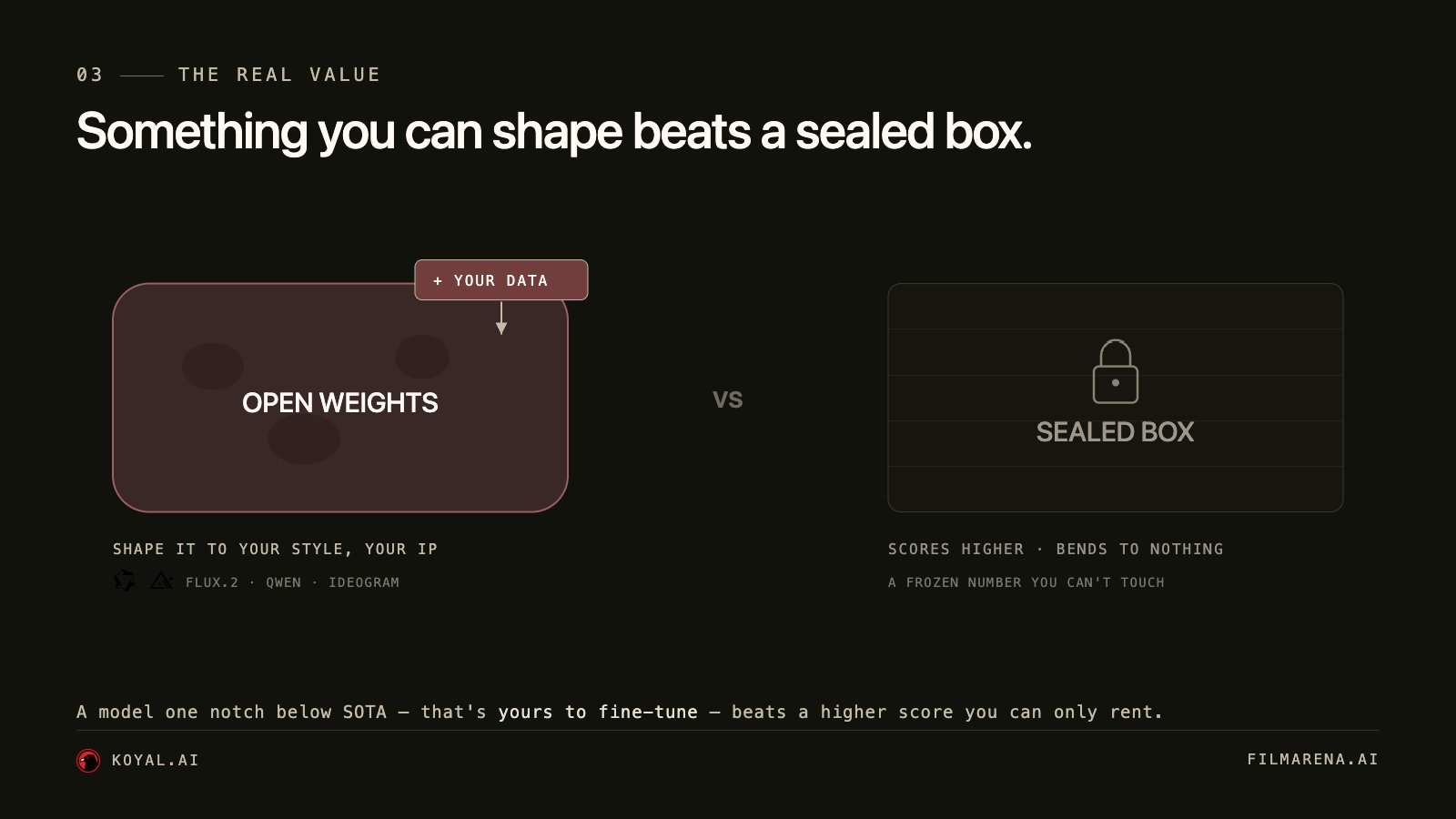
One path actually works: open weights and fine-tuning. It is fine to land slightly below SOTA if you are tunable, because I can build on top of you and train you toward my use case. A tunable model a notch below the leaders beats a frozen closed one that scores higher and bends to nothing. Ideogram 4.0 is the clean example: grab the weights, tune on your data, run it yourself.
And no, this is not about cost. Per image, open and closed are both cents. "Run it locally to save money" is not the draw, because the quality gap is real and people happily pay a few extra cents for top-tier output. The only exception is legal: if compliance forces everything in-house, local matters. Otherwise you go open for tunability and control, not the bill.
But Pick the Omni Model, Because I Can Feed It My Input
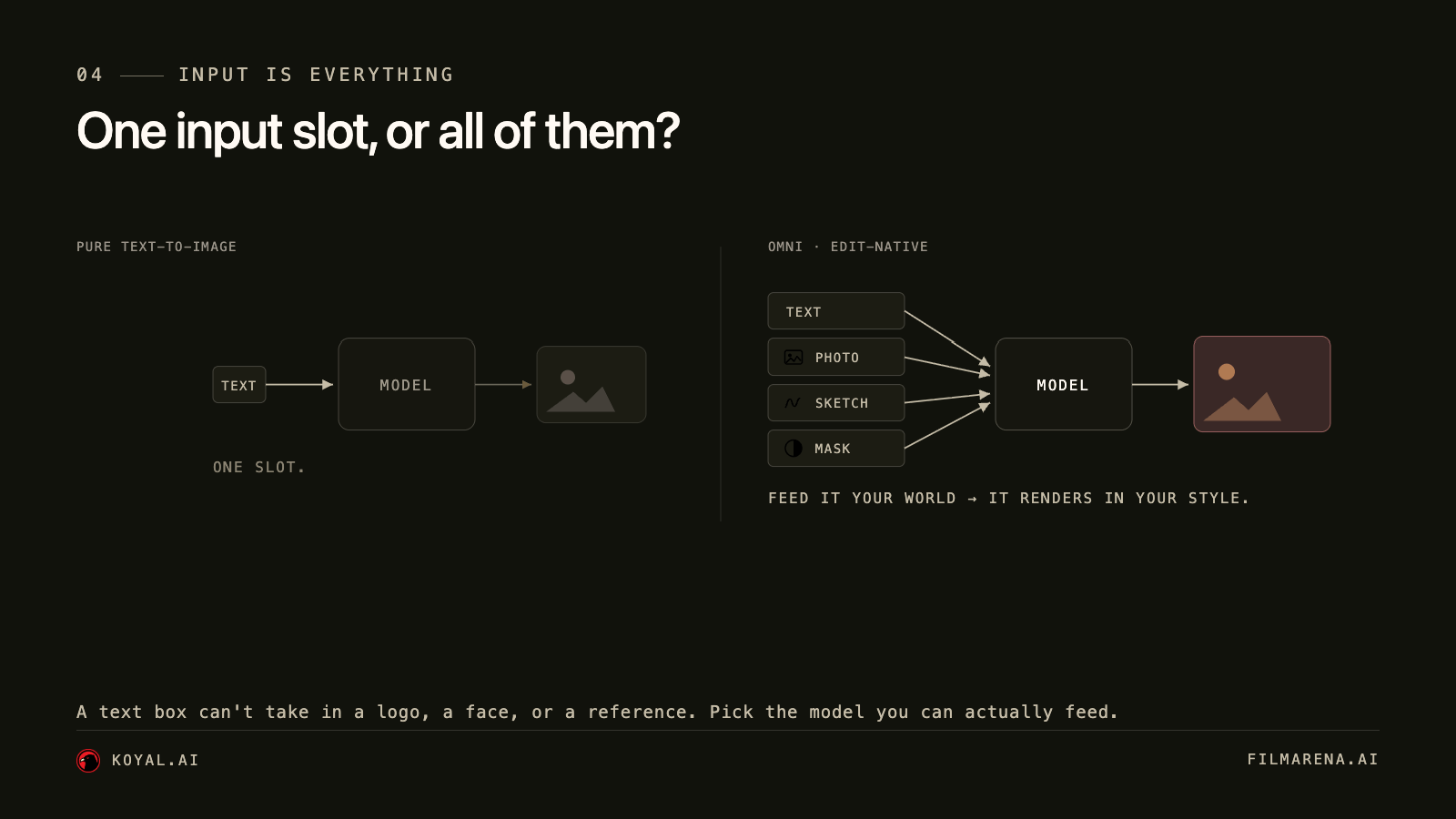
Even among open, tunable models, I take the image-edit one over pure text-to-image. The reason is input. With an edit model I can drop in the Coca-Cola logo and render it in a specific style, or feed in a real-life character and place them in that style. A text box cannot do that. So as good as Krea 2 or Ideogram 4.0 are, I still reach for Qwen-Image-Edit 2511 or FLUX.2 dev: multimodal from the get-go and still fully tunable. Omni-and-tunable beats pretty-and-text-only every time.
Real Work Is Multi-Image, Especially for Video
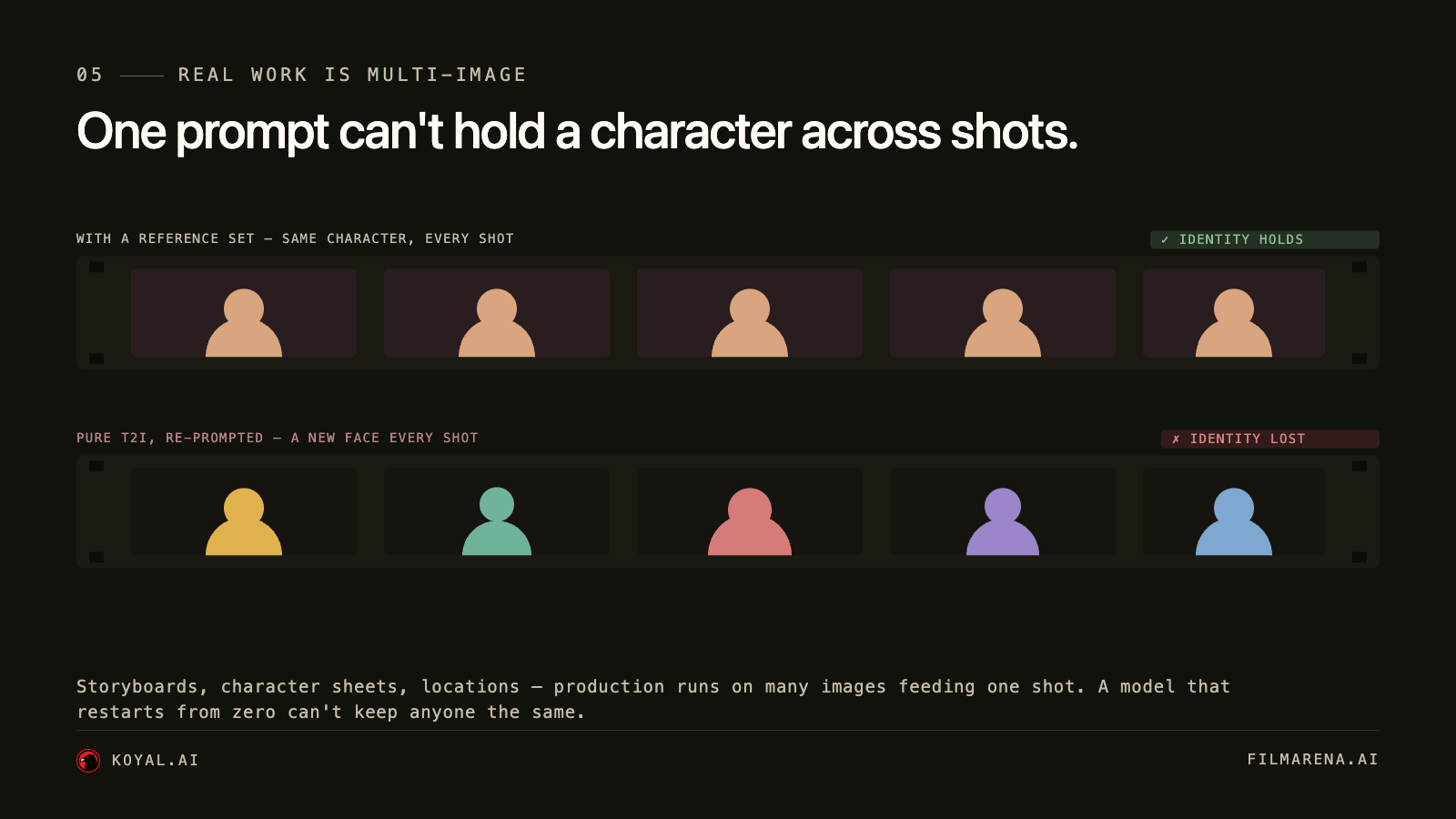
Production runs on many images, not one prompt. Storyboards, character sheets so the same face holds across shots, location plates, props, style references, all carried into the final output. Pure text-to-image restarts from zero each generation and holds none of it. For ads, films, TV, and music videos it matters even more, because video lives on visual continuity. So text-first launches feel like a step backward.
If It Is Obvious, Why Does Everyone Still Do It?
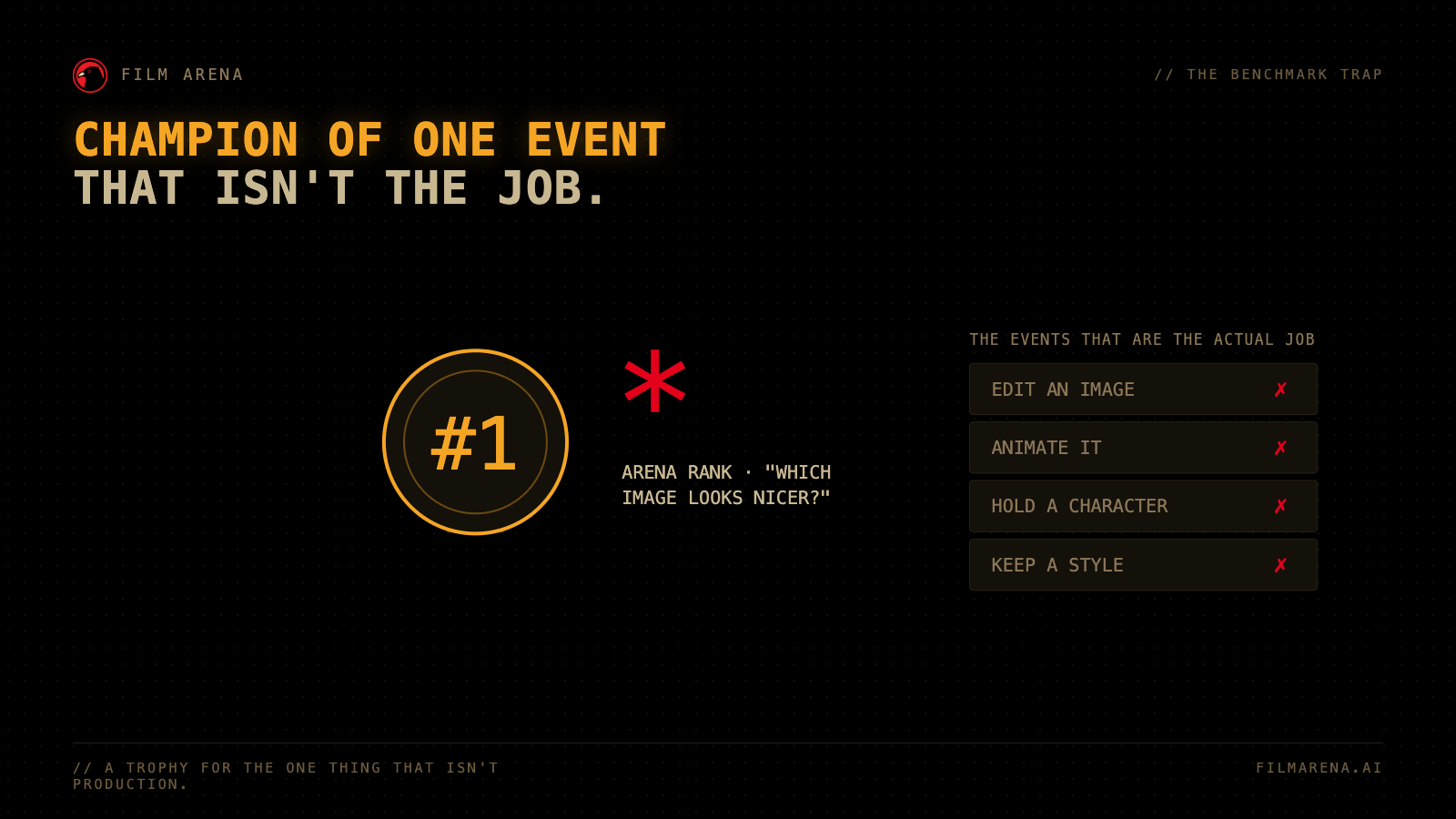
Because it is not obvious. Text-to-image is how models have always been trained, the natural first checkpoint, so labs build, benchmark, and announce there out of habit, and everyone chases the same number. That is the big claim: the number does not matter. It measures how a model trains, not how anyone produces real work, which starts from multi-image input on day one.
Why Film Arena Is Different
So we benchmark the workflow, not the training run. On Film Arena, built by Koyal.ai, you upload your own images and pit models against each other on your content, scored on what production demands: can it edit, animate, and hold a character and style across shots. If a model cannot take an image in and do something useful with it, it does not make the board.
Benchmark the workflow, not the demo. See it at filmarena.ai
Sources
- Pure Text-to-Image Models Are Bullshit — Mehul Agarwal on X. Originally published on X.
Published in Koyal News. Canonical page: https://koyal.ai/news/pure-text-to-image-models-are-bullshit